
Passage
Latches but doesn't lock. Hallways, linen cupboards, laundries — anywhere you only need the door to stay shut.
Lever sets, knobs and pulls for interior doors — in the same finishes as the tapware, which is the whole point of buying them from the same place.
Hardware is specified by function, not by looks. Get this wrong and you end up with a bedroom that can't be locked or a hallway door that jams shut behind a child.
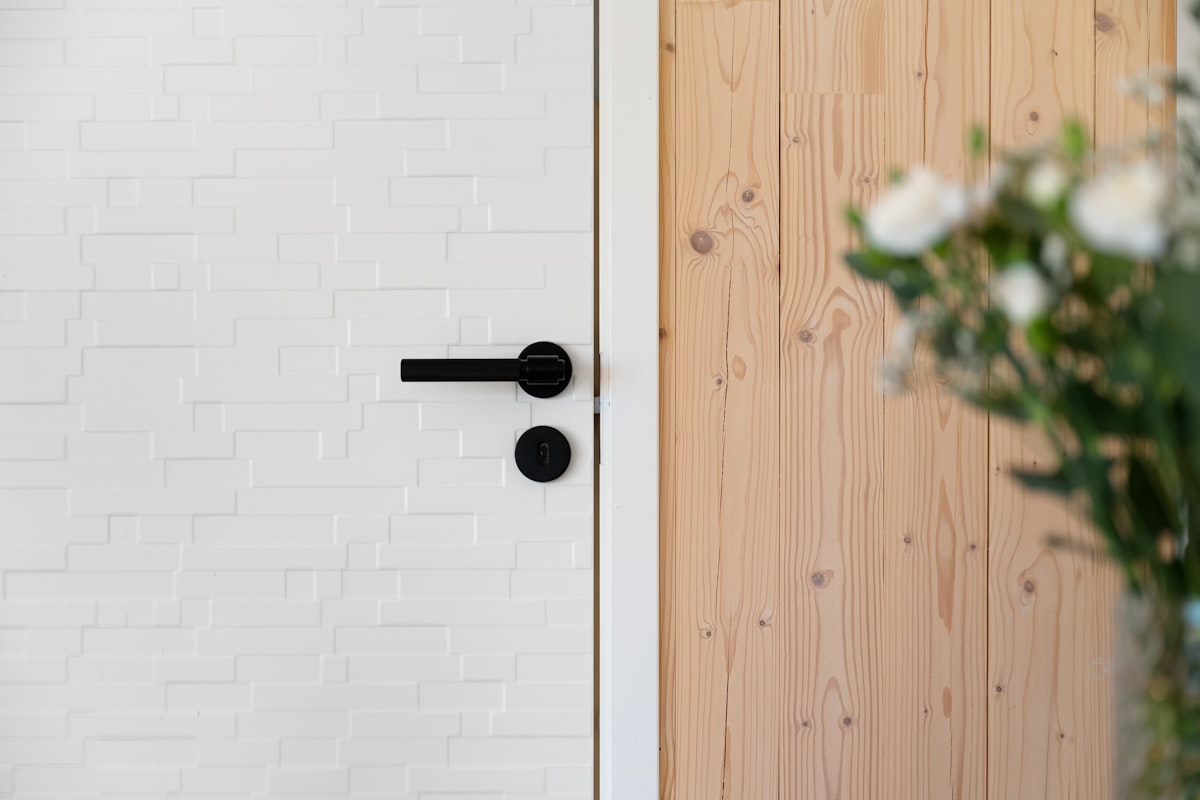
Latches but doesn't lock. Hallways, linen cupboards, laundries — anywhere you only need the door to stay shut.
Locks from inside with a thumb turn, releases from outside with a coin or emergency key. Bedrooms and bathrooms.
Keyed both sides or key outside, turn inside. External doors and anywhere you need to secure a room.
No mechanism — fixed to the face of a door that's held by a magnet or a roller catch. Wardrobes and cavity sliders.
| Specification | What to check |
|---|---|
| Backset | Distance from the door edge to the spindle centre — commonly 60 mm or 70 mm. Must match the existing hole or the door has to be re-bored. |
| Door thickness | Standard interior doors are around 35 mm; solid core and entry doors are thicker and need a longer spindle. |
| Rose or plate | A round rose shows the door face around it; a backplate covers an older, larger cut-out. Useful when replacing hardware on existing doors. |
| Handing | Levers are usually reversible; check before ordering for a specific swing. |
| Finish | Matched to the tapware range — chrome, matte black, brushed nickel, brushed brass, gunmetal. |
The most common job, and the one most likely to go wrong. Three measurements save a return trip to the hardware store.
Send a door count by function — passage, privacy, entrance — and the finish you're using elsewhere.