
S-trap
Waste goes straight down through the floor. The most common set-out in Australian homes on a slab.
- Measure Wall to waste centre
- Common 140 / 160 / 180 mm
Toilets, basins, showers and floor wastes. The notes below are the things that actually decide whether a product fits your rough-in — worth reading before you order, not after.
Trap type and set-out. Get those right and almost any pan will install cleanly; get them wrong and the pan sits proud of the wall with a gap you can't hide.
Waste goes straight down through the floor. The most common set-out in Australian homes on a slab.
Waste goes back through the wall. Usual on suspended floors and in apartments.
Cistern sits on the pan. The workhorse — easiest to service, lowest cost, most forgiving of an imperfect set-out.
Pan sits flush against the wall with the cistern concealed behind it. No gap behind the pan to clean around.
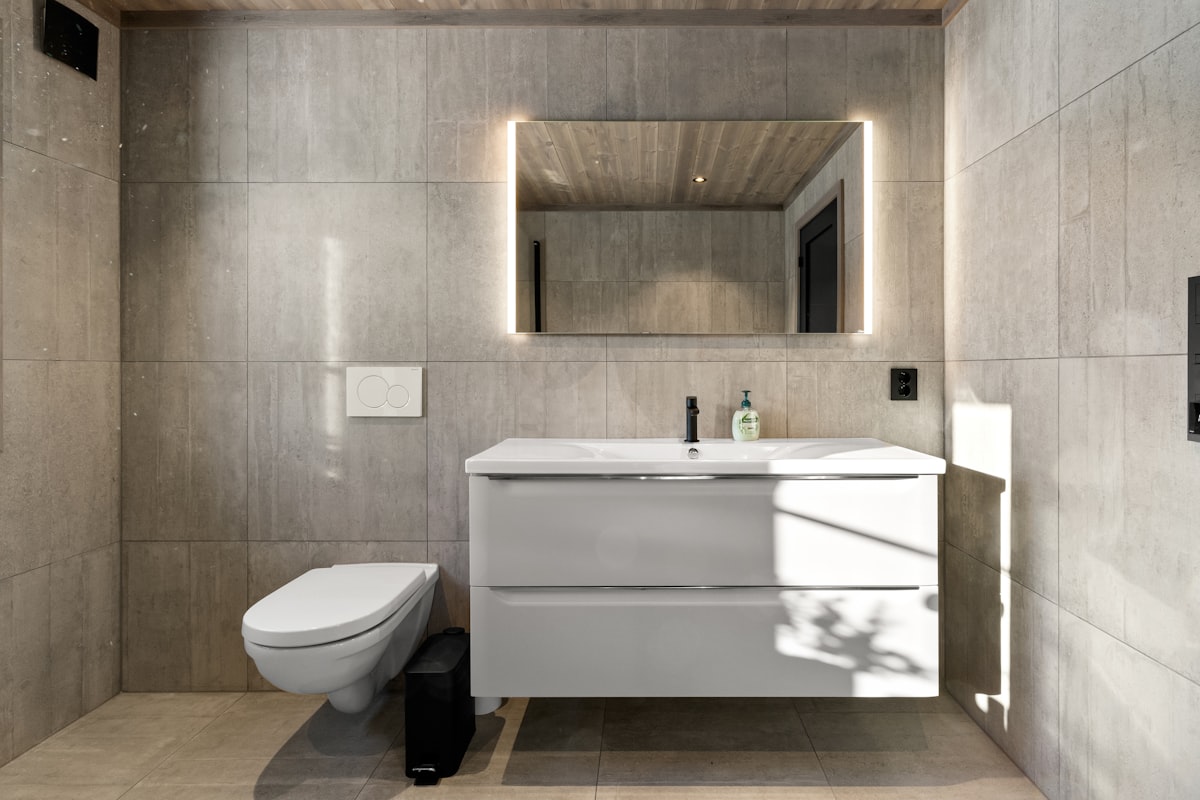
Pan is bracketed off an in-wall frame, floor completely clear underneath. Needs a stud wall or a bulkhead deep enough for the cistern.
No enclosed rim for grime to sit under. Water is directed around the bowl instead. Available across the styles above.
| Specification | What to expect |
|---|---|
| Flush | Dual flush, typically 4.5 / 3 litres |
| WELS rating | Commonly 4 star — check the label on the specific model |
| Material | Vitreous china |
| Seat | Soft-close, quick-release for cleaning |
| Certification | WaterMark required for installation in Australia |
Choose the basin first, because it sets whether the tap sits on the basin, on the bench or on the wall — and that decision has to be made before the plumber roughs in.
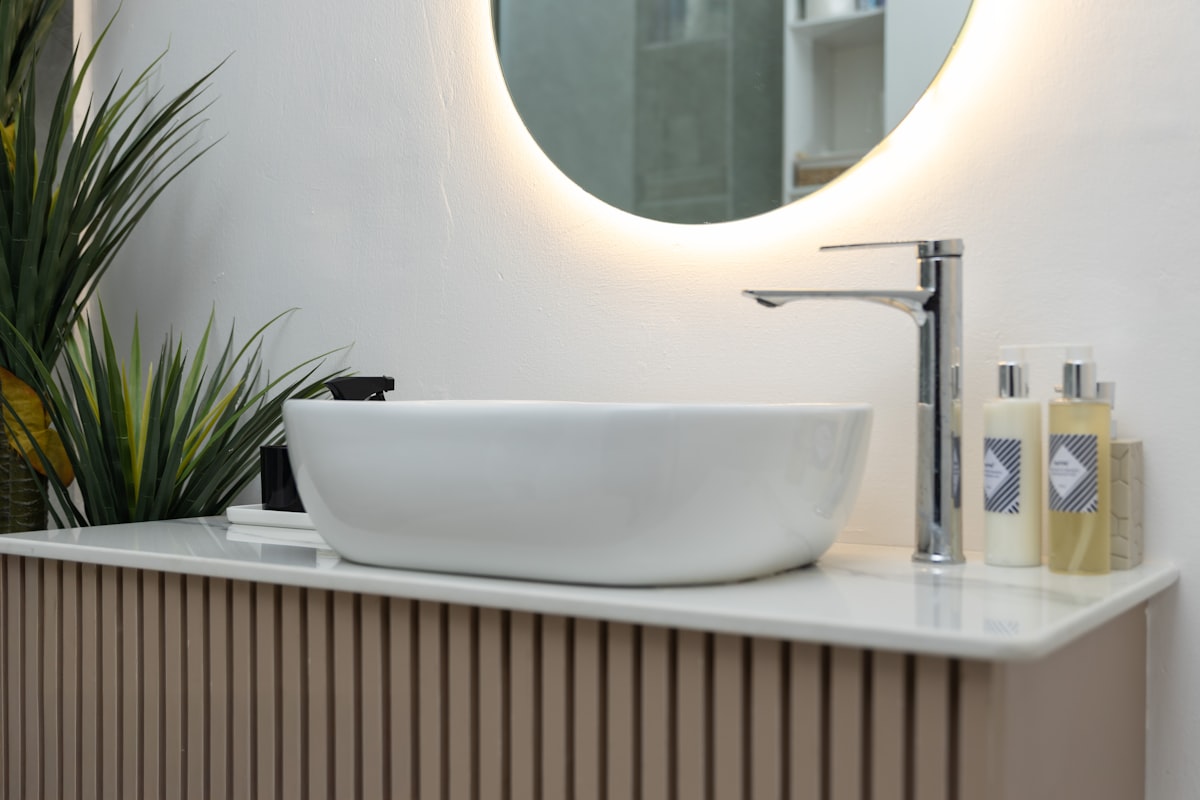
Sits on top of the bench. Needs a taller tap or a wall outlet to clear the rim.
Mounted beneath the benchtop so you can wipe straight into it. Tap goes on the bench or the wall.
Front half projects past the bench. The answer when the vanity is too shallow for a full basin.
No vanity at all. Needs noggings in the wall and the waste concealed — decide early, it can't be retrofitted easily.
| Specification | What to expect |
|---|---|
| Material | Vitreous china, or solid surface for seamless tops |
| Tap holes | 0 (wall tap), 1 (mixer) or 3 (tap set) — specify before ordering |
| Overflow | With or without; a basin without one needs a matching pop-up waste |
| Waste | 32 mm or 40 mm — must match the basin outlet, not just the trap |
WELS star ratings cap what a shower is allowed to use. A 3-star head runs around 9 litres a minute, 4-star around 7.5. Some developments mandate a minimum rating, so check before you fall in love with a head.
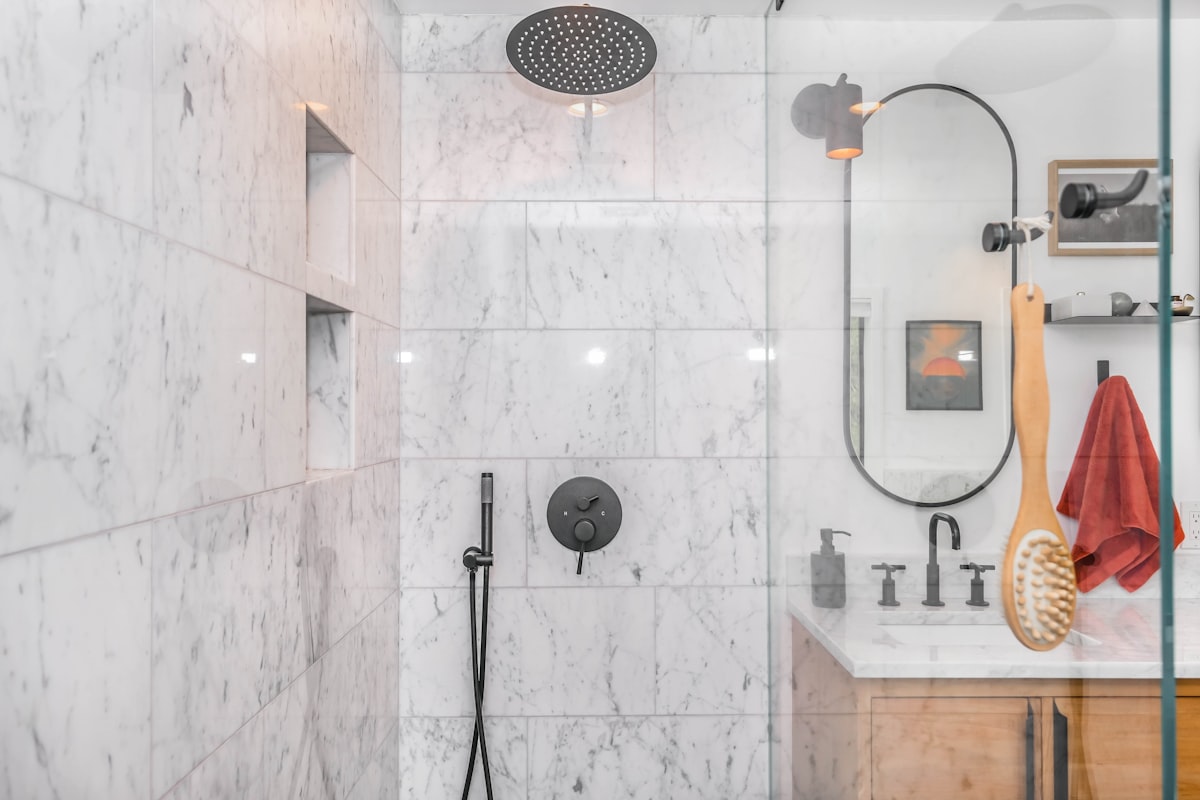
Fixed head from the ceiling or a wall arm. Best coverage, but you can't direct it — pair with a hand shower.
Handheld on a sliding rail. Height adjusts, and it's the practical choice for washing kids, pets or the shower itself.
Overhead, hand shower and diverter as one matched set, so the finishes and the geometry line up.
Single lever for temperature and volume. Ceramic disc cartridge — the part that determines whether it still feels good in five years.
A chrome grate in a bathroom where everything else is matte black is the detail people notice for years. Wastes come in the same finishes as the tapware.
Trap type, set-out and the finish you want. We'll come back with what fits and what it costs.